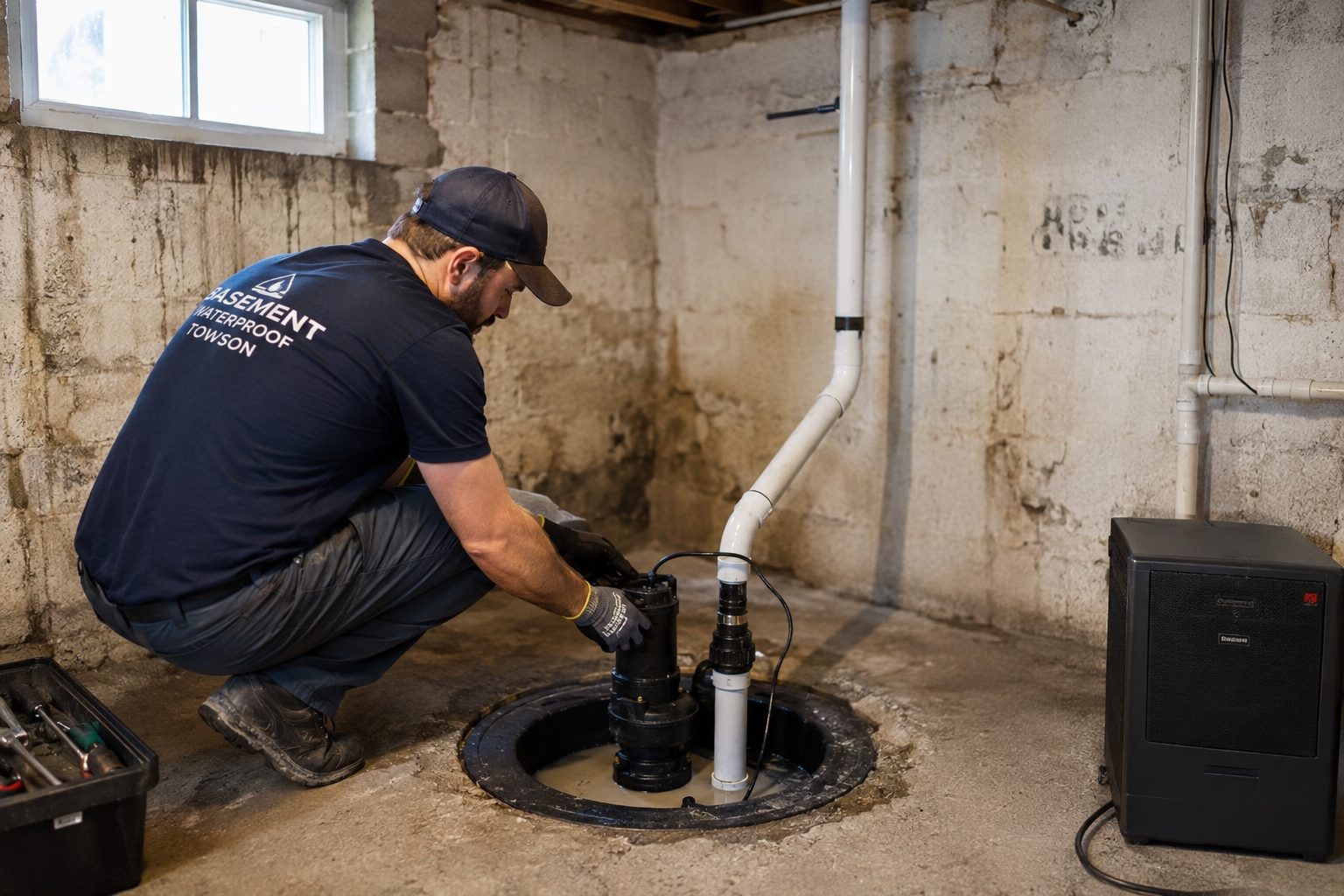
Repair the damage and reduce repeat leaks
Water Damage Basement Repair
Have basement water damage evaluated before covering it back up.
- Free, no-obligation estimates
- Local Baltimore-area team
- We find the source, not just the stain
Repair the damage and reduce repeat leaks
Have basement water damage evaluated before covering it back up.
Water can damage much more than the spot where a puddle first appears. Moisture can wick into drywall, baseboards, framing, insulation, flooring, stored materials, and porous masonry. If the original source is not corrected, replacing damaged finishes can simply reset the clock until the next heavy rain. Basement Waterproofing Towson evaluates both the visible damage and the conditions that allowed water to enter.
Our work focuses on basement repair connected to foundation leakage and moisture problems. That can include opening damaged areas for access, addressing cracks or seepage routes, improving drainage or sump performance, and preparing the basement for appropriate restoration. Severe flooding, sewage contamination, major mold conditions, or electrical hazards may require specialized remediation before or alongside waterproofing work.
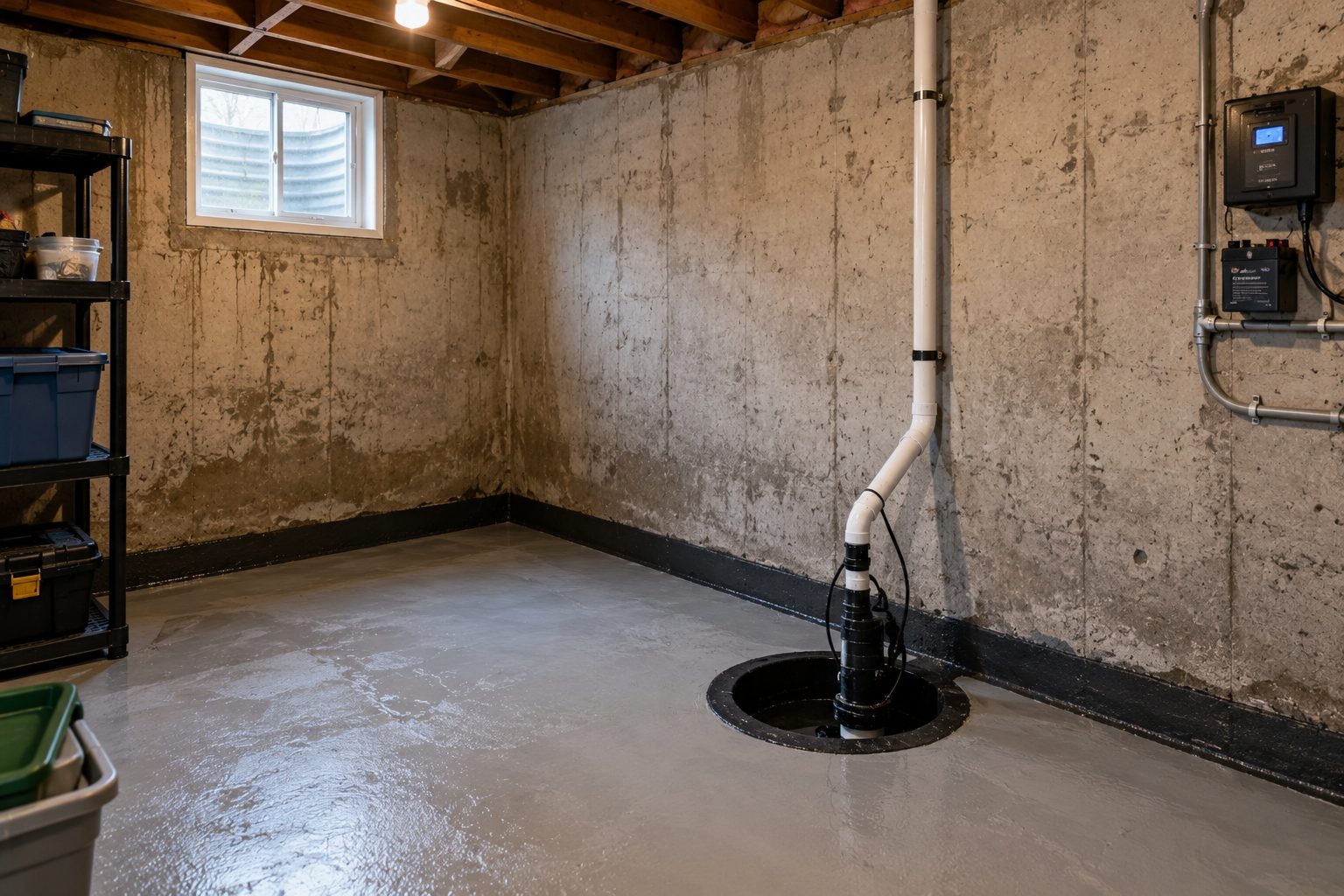
Water damage is a symptom. Before replacing finishes, we look for the route the moisture followed into the basement and determine whether the cause is still active. That may involve a foundation crack, seepage along the perimeter, groundwater rising beneath the slab, a failed sump pump, or a drainage problem that overwhelms the foundation during storms. Once the source is understood, repairs can be sequenced so new materials are not installed over an unresolved leak.
We trace staining, mineral deposits, damp joints, crack locations, and water marks to determine where moisture likely entered and how far it traveled.
Finished walls or flooring sometimes conceal the foundation area that needs inspection or repair. Where appropriate, damaged materials may need to be removed or opened so the water source can be reached.
Once exposed, leaking cracks, wall-floor joints, or localized seepage points can be repaired using methods suited to the condition and foundation type.
When water damage results from groundwater or perimeter seepage, drainage improvements or sump equipment may be necessary to reduce repeat incidents.
After the moisture source is addressed, affected areas should be allowed to dry appropriately before replacement finishes are installed. We explain which waterproofing work must be completed first.
| Service | Estimated Cost | Average |
|---|---|---|
| Localized leak and repair work | $800-$3,000 | $1,750 |
| Waterproofing-related repair package | $2,500-$8,000 | $5,000 |
| Drainage and sump corrections | $3,500-$12,000 | $7,000 |
Planning ranges vary widely. Costs can increase when extensive demolition, drying, mold remediation, electrical work, flooring replacement, or structural repairs are required.
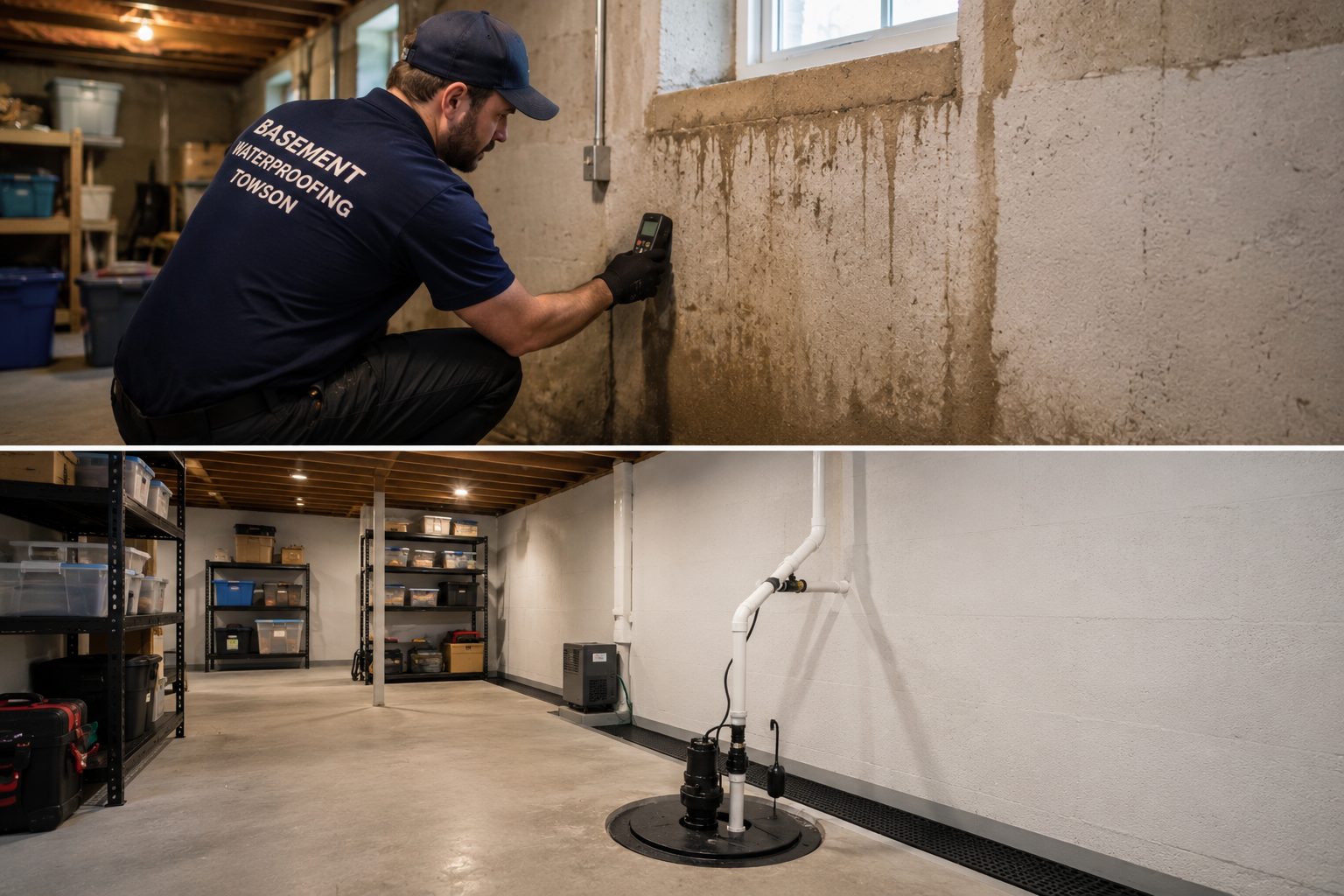
Repairing finishes without fixing the water route can lead to repeated damage. We prioritize the moisture problem before cosmetic restoration.
If a basement has conditions requiring a specialist, we explain where waterproofing fits into the overall repair sequence.
Water can move behind walls and beneath flooring, so we use visible clues to understand the broader path of moisture.
Before replacing damaged basement finishes, make sure the leak behind the damage has been addressed.
Free, no obligations
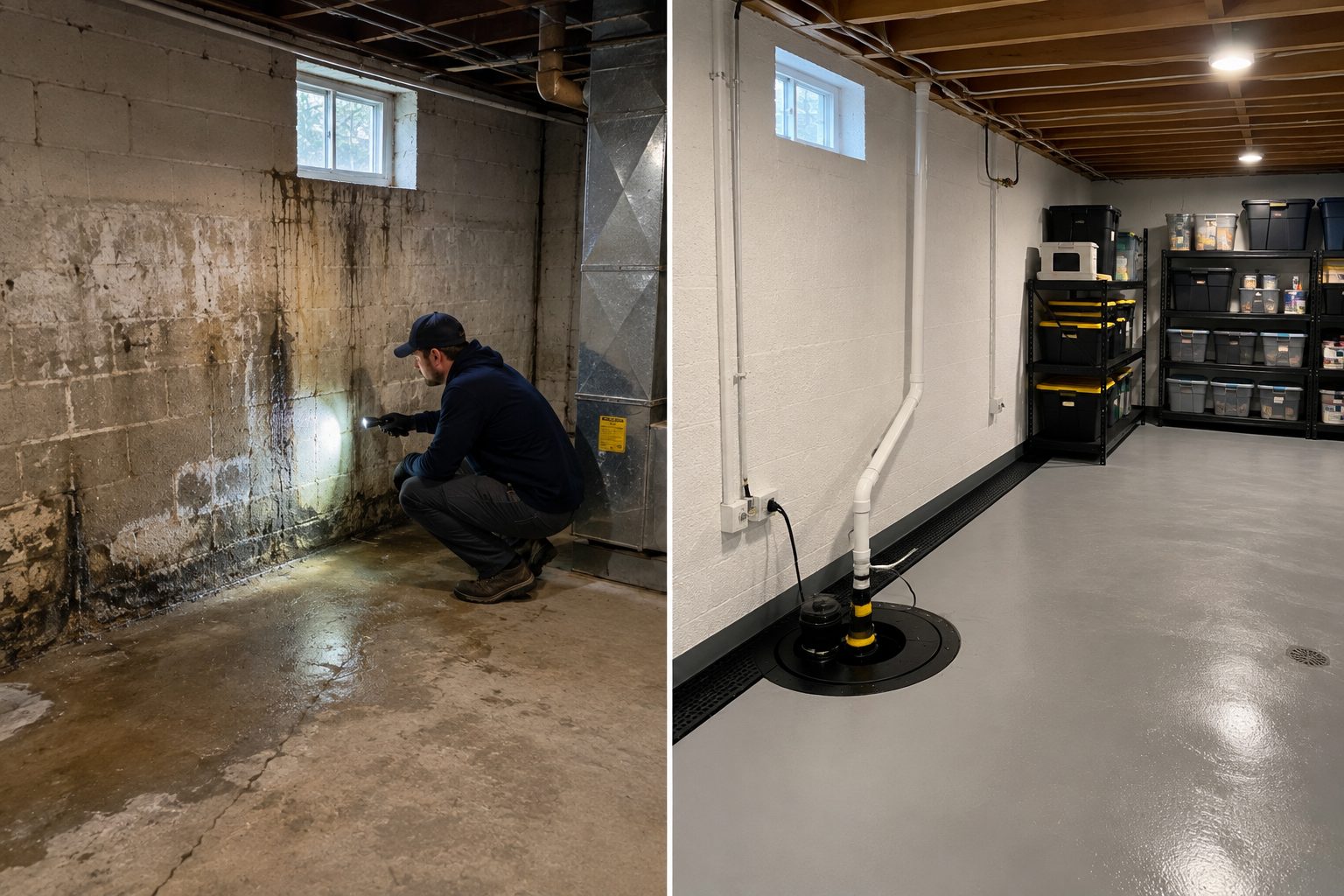
We review staining, damaged materials, water lines, odors, cracks, and other signs that help show where moisture traveled.
We inspect accessible foundation surfaces, drainage conditions, sump equipment, and joints to determine the likely cause.
Hazardous water, electrical concerns, or extensive contamination may need to be handled before waterproofing work proceeds.
We perform the agreed crack, drainage, sump, or waterproofing work intended to reduce future water entry.
Once the area is appropriately dry and the source is addressed, damaged finishes can be restored as the project requires.