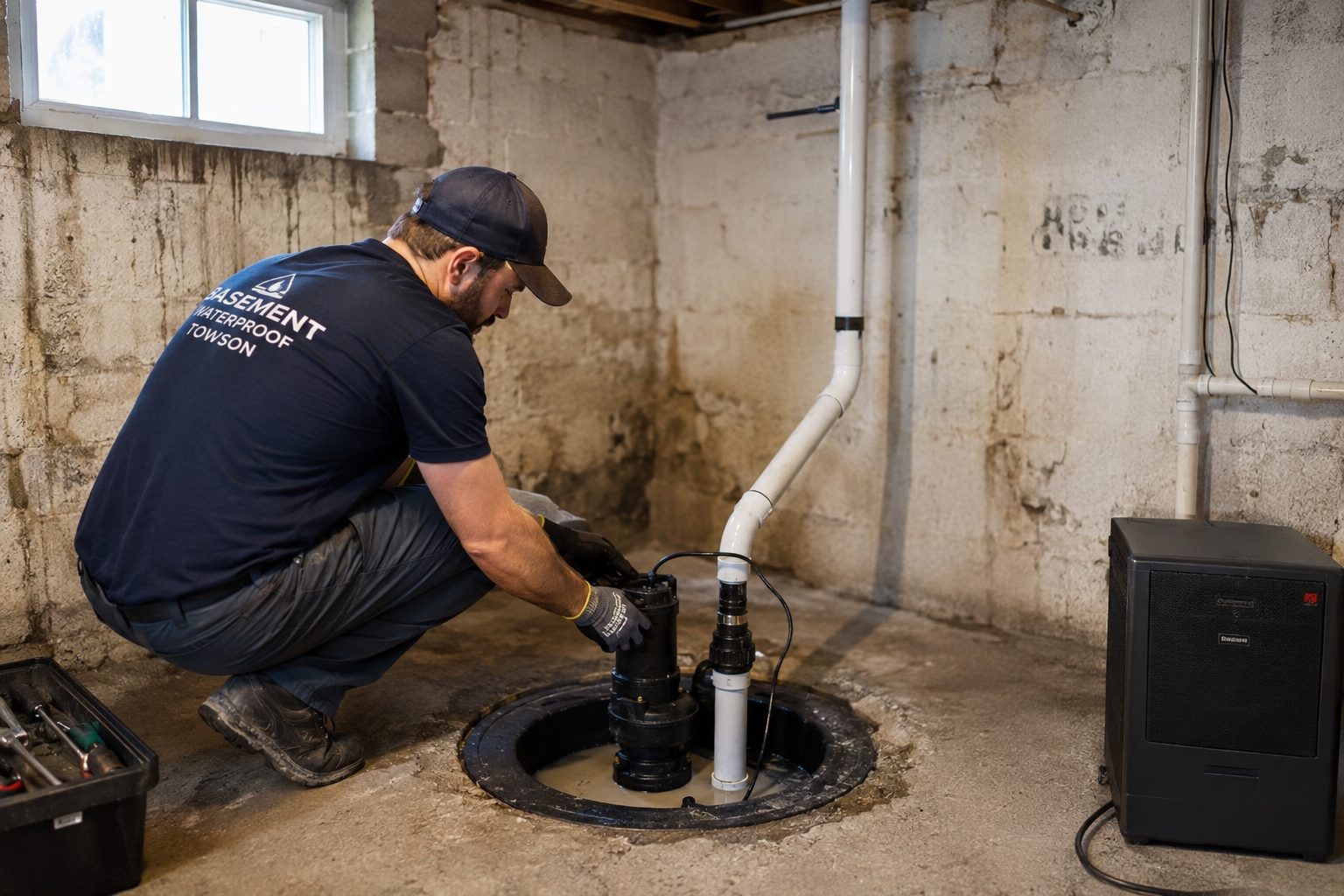
Small cracks can create persistent water problems
Basement Crack Repair in Towson
Have a leaking or changing basement crack evaluated.
- Free, no-obligation estimates
- Local Baltimore-area team
- We find the source, not just the stain
Small cracks can create persistent water problems
Have a leaking or changing basement crack evaluated.
A basement crack does not automatically mean a foundation is failing, but it should not be ignored when it leaks, widens, shifts, or returns after previous patching. Some cracks form as concrete cures or a house settles. Others may reflect ongoing foundation movement. Even a narrow non-structural crack can provide a direct path for rainwater or groundwater when soil around the foundation becomes saturated.
Basement Waterproofing Towson evaluates the crack itself and the surrounding symptoms before recommending a repair. We look at crack direction, width, displacement, moisture staining, location, prior repairs, and nearby signs of movement. When the concern is primarily leakage, targeted waterproof crack repair may be appropriate. When the crack suggests structural movement, the repair plan may need to include foundation work rather than sealing alone.
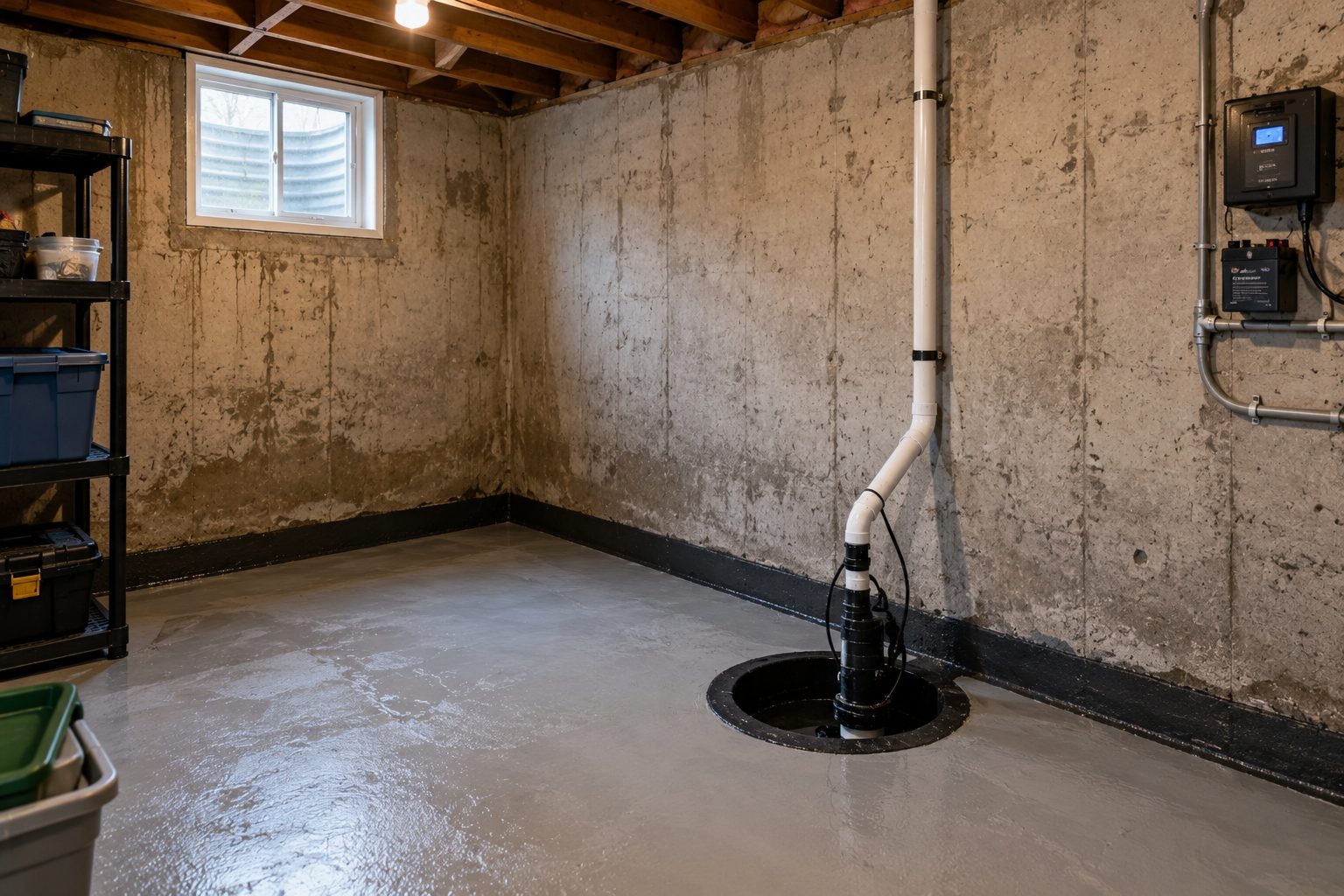
Crack repair starts with classification. A vertical crack in a poured concrete wall may behave differently from a stair-step crack through masonry joints or a horizontal crack showing wall pressure. The presence of water adds another variable. We evaluate what the crack is doing, not just what it looks like at a glance. That allows us to recommend a repair intended for the actual condition and avoid treating a movement problem as if it were only a waterproofing issue.
Vertical cracks in poured concrete can allow water to enter during wet weather. Depending on the crack condition and access, it may be possible to seal or inject the crack to reduce leakage.
Water appearing near a wall can sometimes be mistaken for a wall crack when it is actually entering along the footing or floor joint. We identify the true entry route before recommending repair.
Cracks following mortar joints can be associated with settlement or movement. We look for displacement, progression, and related symptoms before deciding whether waterproofing alone makes sense.
Horizontal cracks can indicate lateral pressure on a foundation wall and deserve careful evaluation. Sealing a crack may address moisture but does not correct structural movement when that is present.
If a crack leaks again after patching, the original repair may not have addressed movement or the full water path. We inspect the prior repair and surrounding foundation before recommending another approach.
| Service | Estimated Cost | Average |
|---|---|---|
| Single non-structural crack repair | $500-$1,500 | $900 |
| Multiple crack repairs | $1,000-$3,500 | $2,000 |
| Crack repair with drainage work | $2,500-$7,500 | $4,500 |
These are broad planning ranges. Structural stabilization, difficult access, finished-wall removal, recurring movement, or extensive waterproofing can increase the total cost.
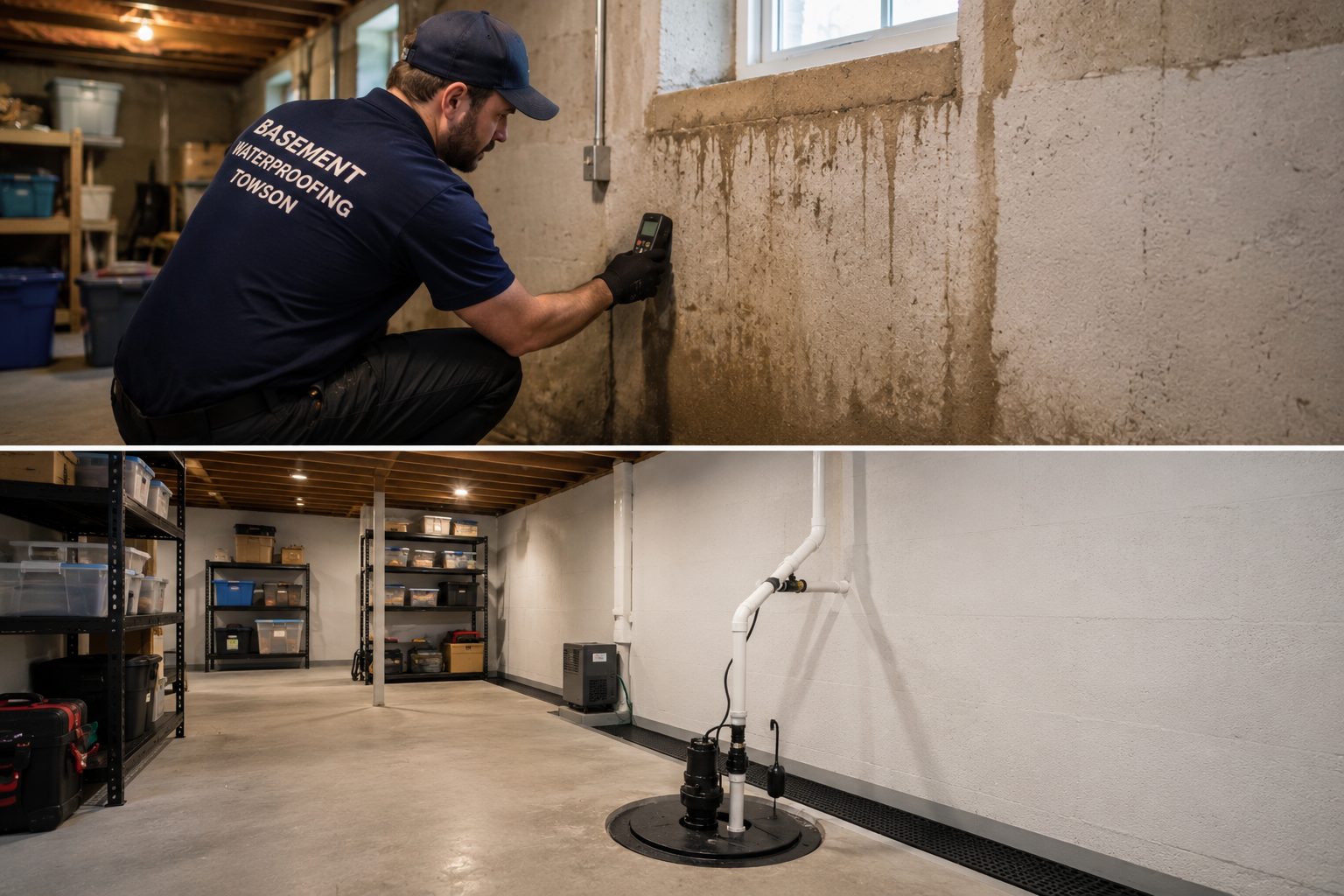
Crack direction, width, movement, and surrounding symptoms help determine whether a waterproof repair is appropriate.
A repair that stops seepage is not necessarily a structural repair. We distinguish between the two when planning the work.
When a single crack is the primary issue, we can focus on that area instead of automatically recommending whole-basement work.
If a basement crack leaks, widens, or keeps coming back, have it assessed before covering it with new finishes.
Free, no obligations
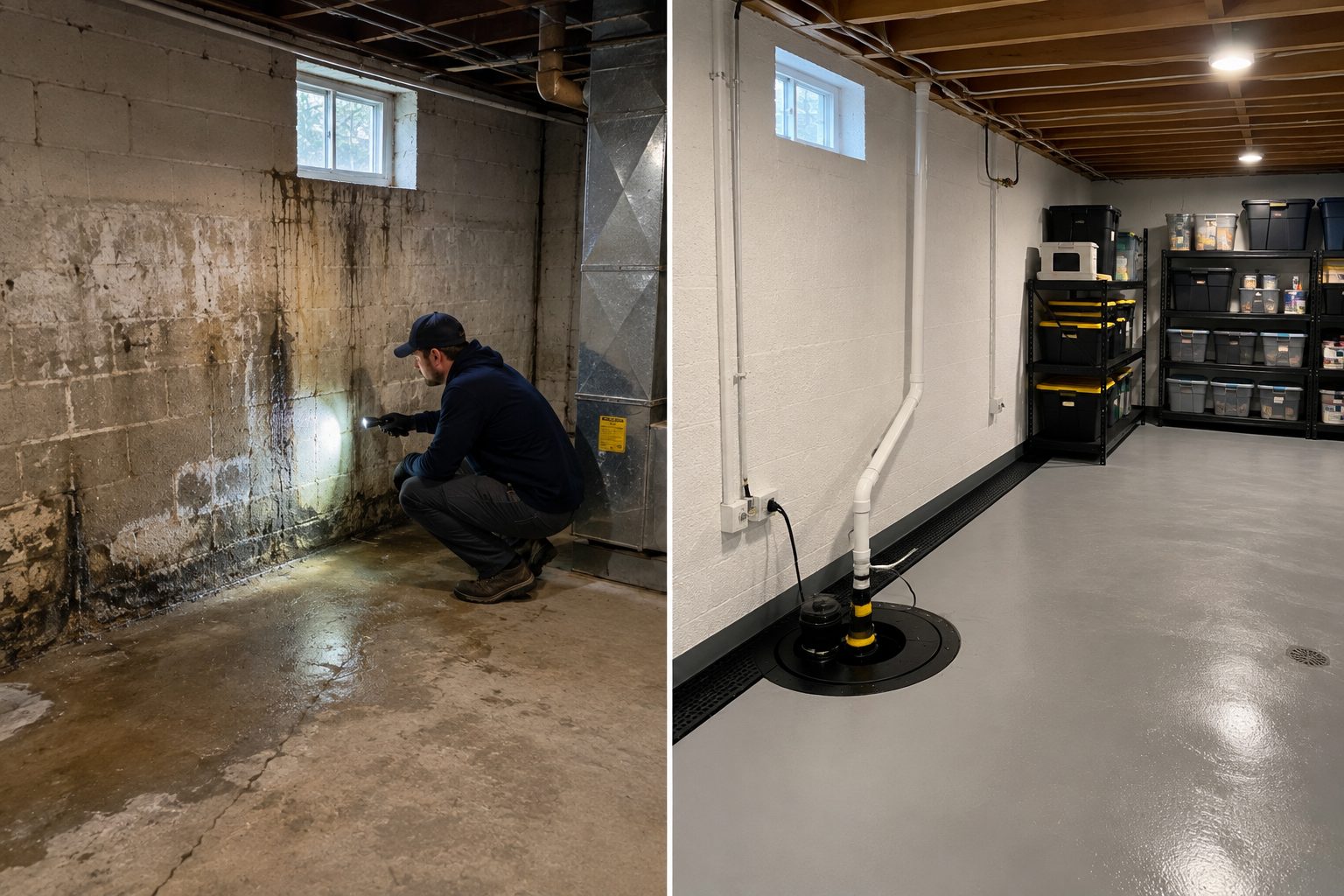
We review direction, width, displacement, moisture staining, previous patches, and nearby foundation conditions.
We identify whether the main concern is water intrusion, foundation movement, or a combination of both.
The crack surface is made accessible and prepared for the repair method selected for the condition.
We perform the agreed sealing, injection, drainage, or related work based on the crack and water path.
Where movement is a concern, we explain which changes should prompt additional foundation evaluation.