Stop recurring basement water at the source
Basement Waterproofing in Towson
Get a waterproofing plan based on your basement's actual water problem.
- Free, no-obligation estimates
- Local Baltimore-area team
- We find the source, not just the stain
Stop recurring basement water at the source
Get a waterproofing plan based on your basement's actual water problem.
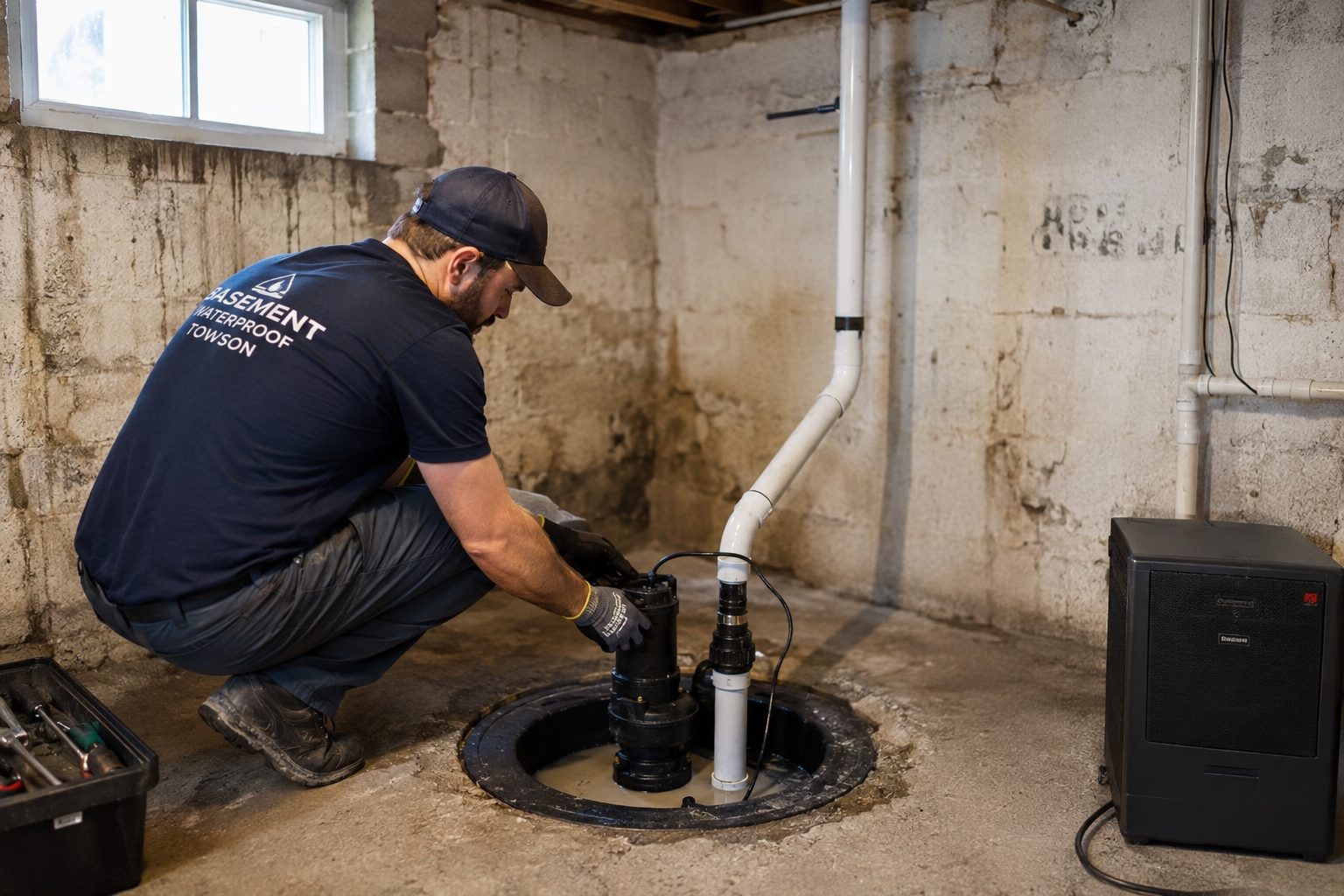
Basement waterproofing should do more than make a wet wall look dry for a few weeks. The first step is understanding how moisture is reaching the basement. Water may be entering through a wall crack, along the wall-floor joint, through porous masonry, beneath the slab, around a pipe penetration, or because an existing drainage or sump system is no longer keeping up. Basement Waterproofing Towson evaluates those clues before recommending a repair.
Our waterproofing work can include interior drainage, sump improvements, crack sealing, moisture-control measures, and targeted repairs based on the conditions we find. We focus on systems that manage water rather than simply hiding staining with coatings or finished materials. If you see puddles, damp walls, mineral deposits, peeling finishes, or recurring musty odors, an inspection can help determine what is happening and how extensive the repair needs to be.
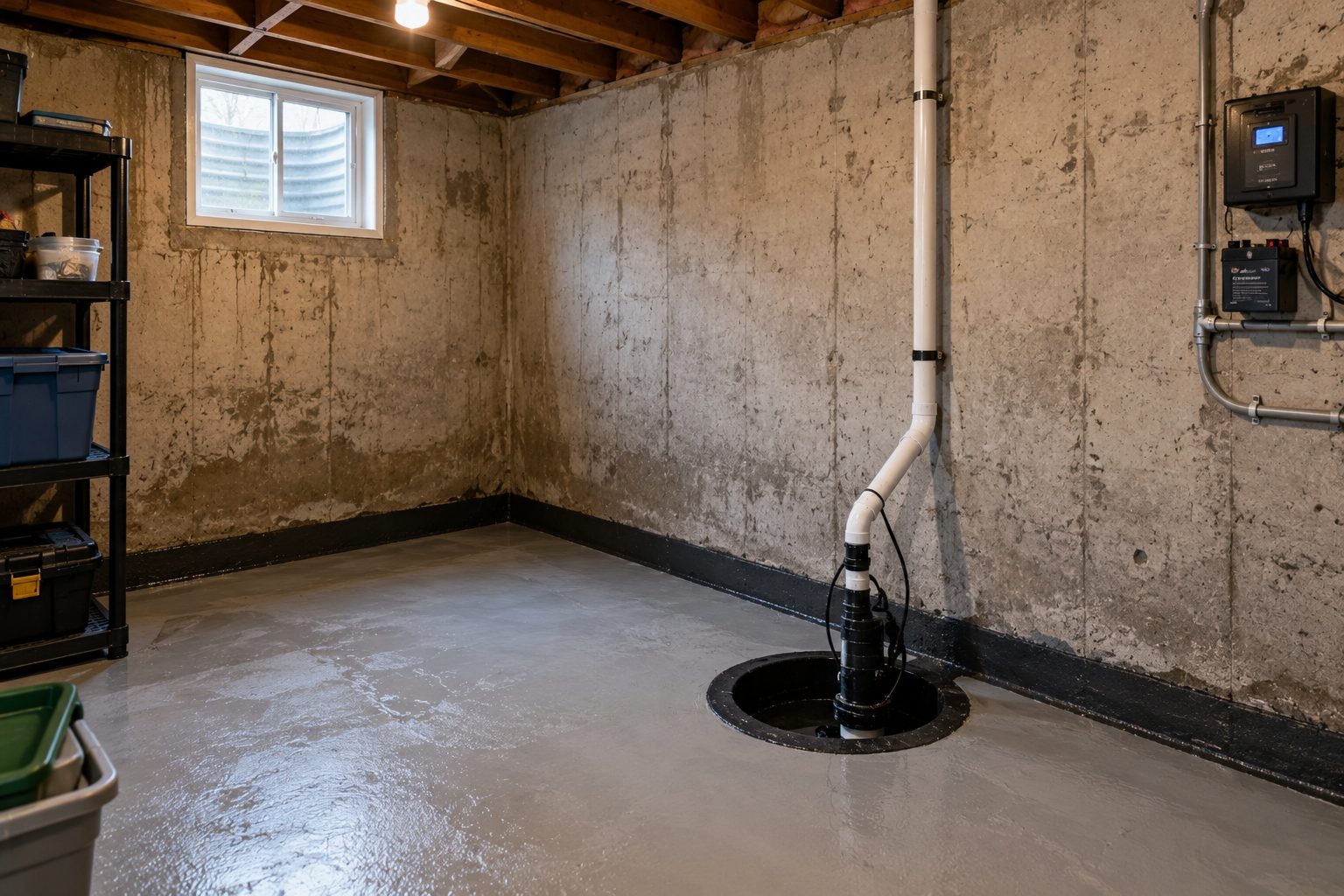
A successful waterproofing project starts by separating symptoms from causes. We look at when the basement gets wet, where moisture first appears, whether the issue follows heavy rain or persists in dry weather, how exterior water is managed, and whether the home already has drainage or sump equipment. From there, we can recommend a focused repair or a more complete water-management system. The goal is not to sell every homeowner the same package. It is to build a repair around the path the water is taking.
Interior drainage can help collect water that reaches the foundation and direct it toward a controlled discharge point before it spreads across the basement floor. The exact configuration depends on foundation type, slab conditions, water volume, and access.
Water commonly appears at the joint where a foundation wall meets the floor or through porous masonry and small openings. We evaluate the moisture pattern and determine whether localized sealing, drainage, or broader waterproofing measures are appropriate.
Cracks can provide a direct path for stormwater or groundwater. We assess whether a crack appears primarily related to water intrusion or whether movement, displacement, or other structural warning signs call for additional foundation repair.
A waterproofing system needs a reliable way to move collected water away from the basement. We evaluate sump pit placement, pump condition, discharge routing, and capacity when sump equipment is part of the solution.
Not every damp basement has visible running water. Condensation, porous walls, poor air movement, and persistent ground moisture can create high humidity and odors. We identify which moisture sources waterproofing can address and where additional humidity control may help.
| Service | Estimated Cost | Average |
|---|---|---|
| Localized waterproofing or sealing | $750-$2,500 | $1,500 |
| Interior drainage installation | $3,000-$9,000 | $6,000 |
| Drainage with sump pump system | $4,000-$12,000 | $7,500 |
These are general planning ranges, not quotes. Basement size, demolition, foundation type, water volume, access, drainage length, sump requirements, and finish restoration can significantly change project cost.
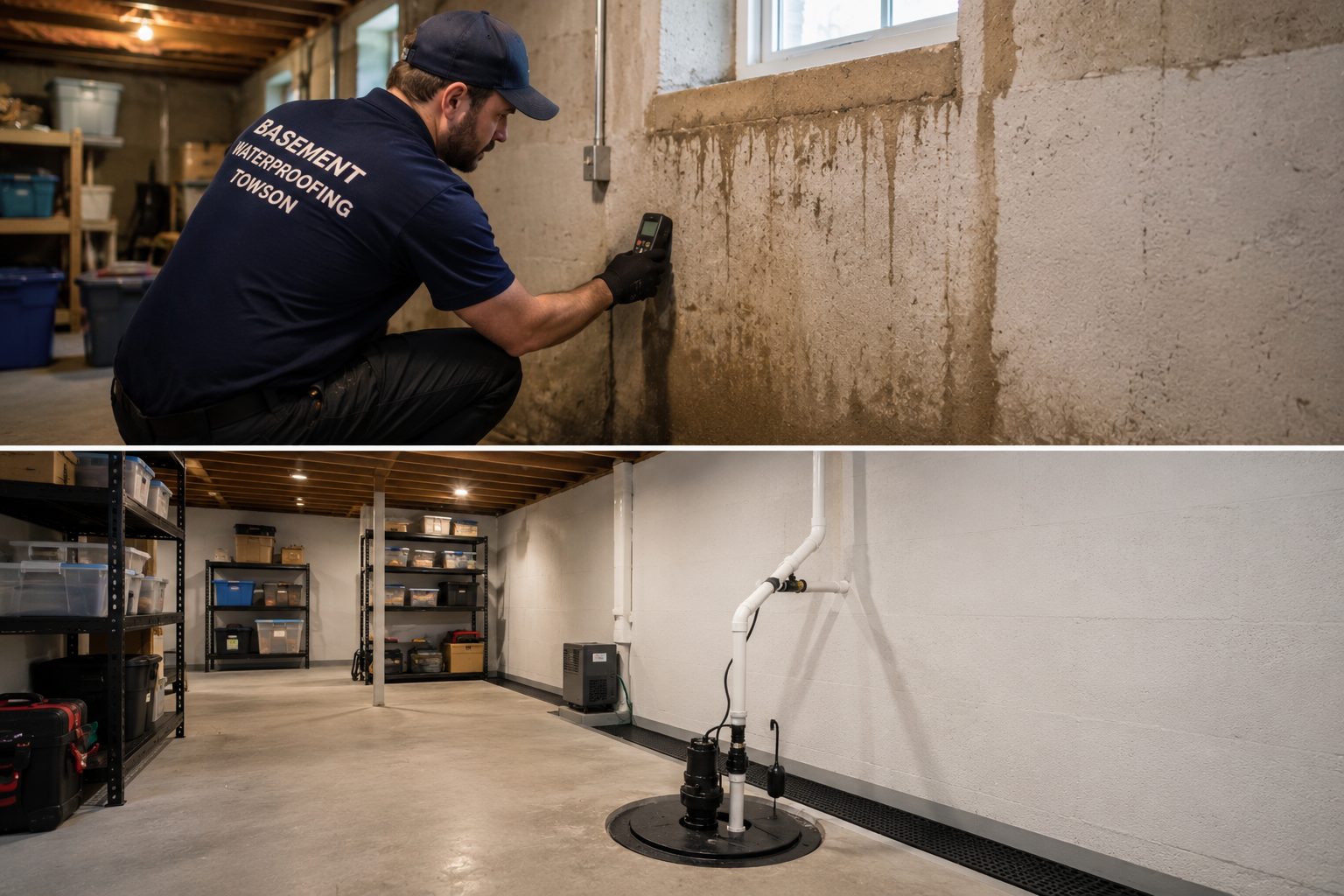
We begin with the water pattern and foundation conditions instead of assuming every basement needs the same waterproofing system.
We explain what the proposed system is designed to do, where water will be collected, and how it will be discharged.
Our goal is to control the route water takes through or around the foundation rather than relying on a cosmetic cover-up.
If your basement repeatedly gets wet, find out where the water is coming from before another storm tests it.
Free, no obligations
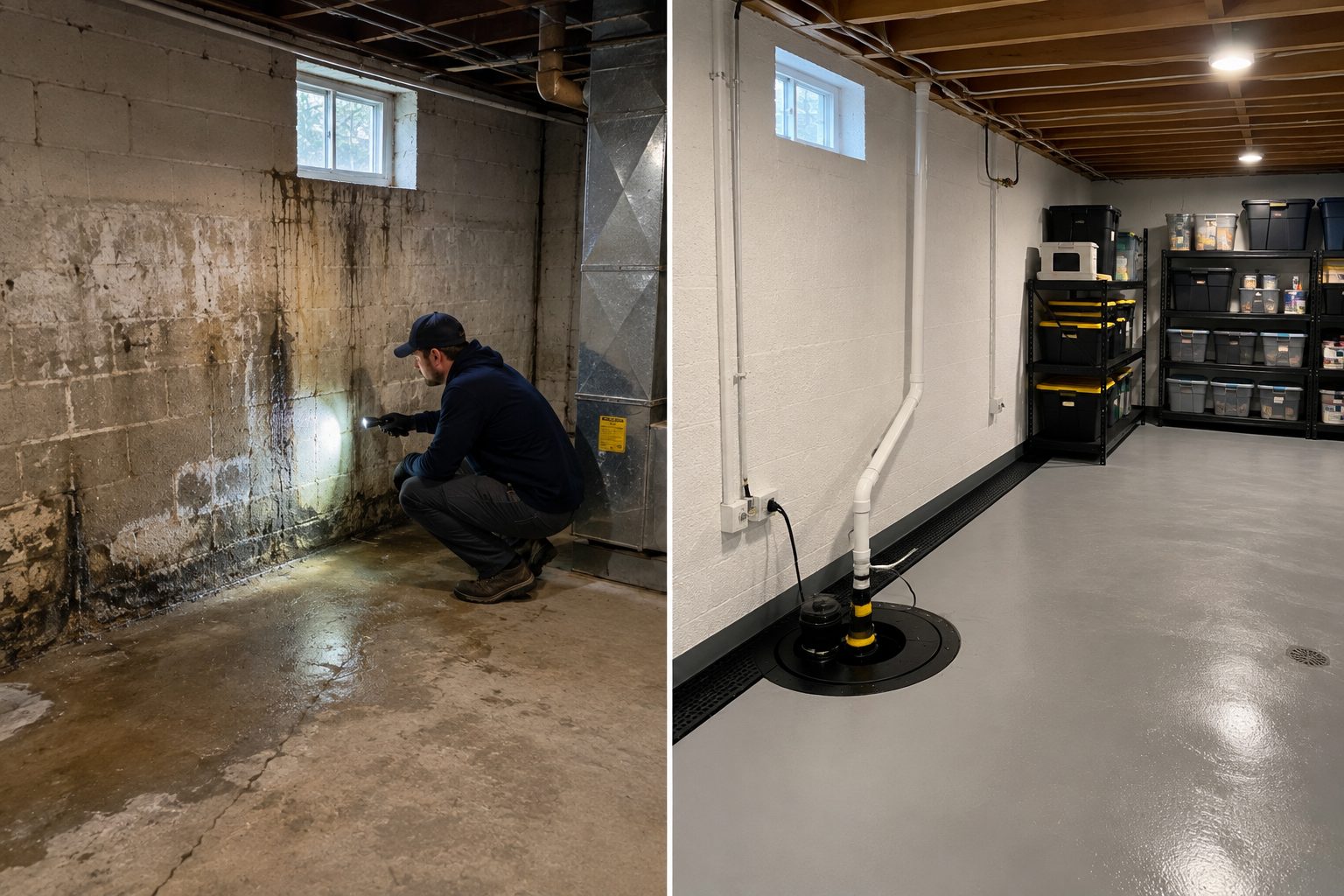
We review visible staining, cracks, floor joints, drainage conditions, sump equipment, and the areas where water first appears.
We consider rainfall patterns, grading, groundwater pressure, foundation construction, and existing drainage to narrow down the source.
We recommend the waterproofing components needed for the problem and explain any preparation or access requirements.
The repair is completed according to the agreed scope, with drainage and pump components checked before cleanup.
We explain any sump testing, discharge checks, or moisture monitoring that can help keep the system working properly.